Championing Quality, Person-Centered Residential Care
Saving Wrentham and Hogan Alliance, Inc. is dedicated to protecting the rights of individuals with intellectual and developmental disabilities by ensuring access to informed choices and dignified, person-centered residential and day options. Our mission is rooted in advocacy, legal action, and public education. We want the state to honor its promise of real choices for families and individuals with intellectual and developmental disabilities
🪧Our Mission
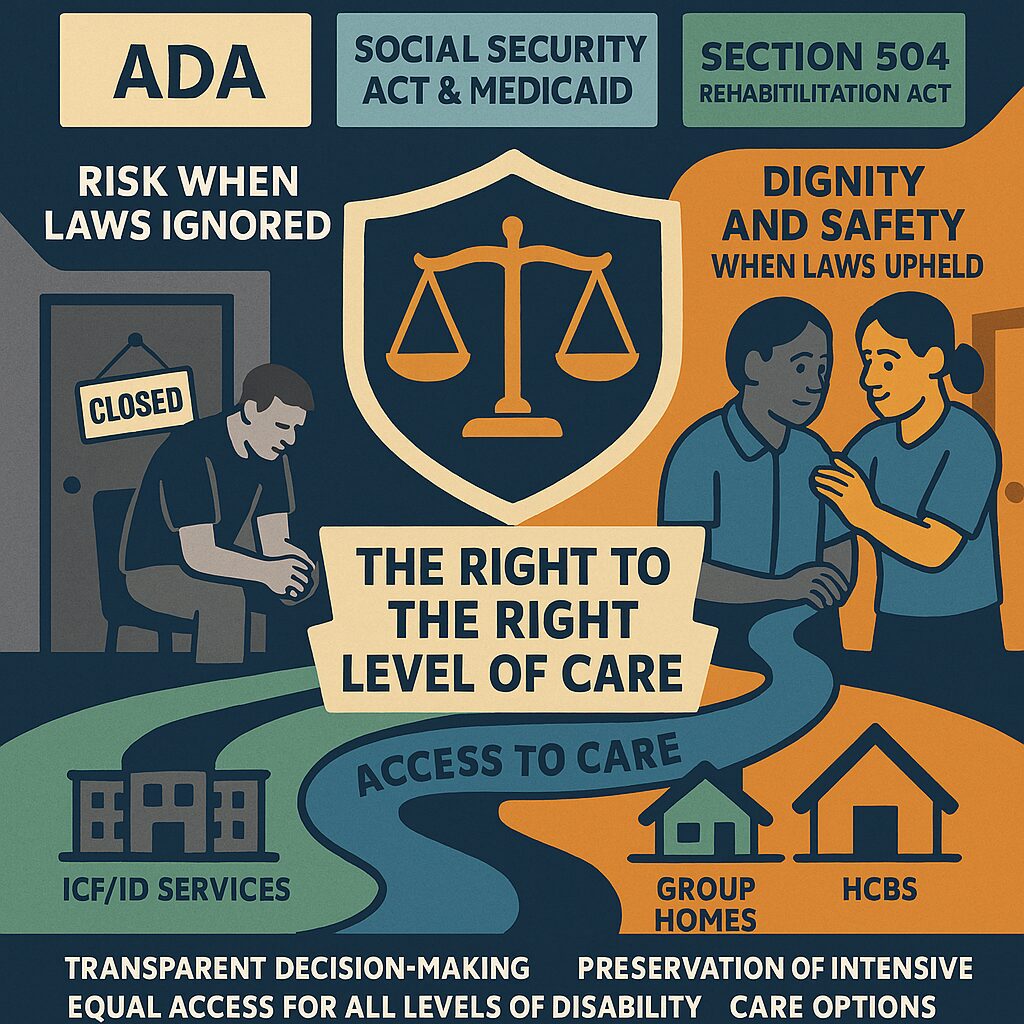
Saving Hogan and Wrentham Alliance champions the rights of individuals with intellectual and developmental disabilities to access quality, person-centered residential care. We fight for the preservation and improvement of the ICF/IID model at Massachusetts’ Wrentham Developmental Center and Hogan Regional Center, empowering families and individuals to choose the care that best supports their lives. Through legislative advocacy, legal action, and public education, we work to ensure diverse, dignified care options and informed choices remain available to all.


Our Vision
We are under no illusions: the road ahead is steep. The systemic barriers are real and the needs are urgent. But we believe in naming the ideal—even if it feels like a pipe dream—because vision is the first act of transformation.
Saving Wrentham and Hogan Alliance exists to imagine boldly and advocate fiercely for a future where people with intellectual and developmental disabilities (IDD) and their families have informed choices.
Here is our vision:
🌱 Expanding Admissions: A Choice for All
We proudly support opening admissions to individuals and families who actively choose the ICF/IID facility-based model over traditional community-based care. Everyone deserves the right to select the support environment that best suits their needs—whether it’s the embrace of a holistic, campus-based community or the services found in broader community-based services. By welcoming those who find empowerment, healing, and belonging in the Wrentham and Hogan model, we honor personal autonomy and uphold the fundamental principle of choice in care. The Olmstead V. L.C. decision provides precedent for offering choice.
🏢 Day Habilitation Facility for the Unserved
Thousands of individuals with complex disabilities remain unserved across Massachusetts. It is urgent and feasible to expand services on the Wrentham Developmental Center and Hogan Regional Center campuses.
The creation of a Day Habilitation Facility on the Wrentham and Hogan Regional Center campuses would fill this urgent gap in services that mainly affects the high acuity population. This model would be specifically designed to serve individuals currently without access to appropriate programming. This facility would:
-
- Leverage existing infrastructure at Wrentham and Hogan, including clinical, therapeutic, and administrative resources.
-
- Provide medically necessary habilitative services under MassHealth guidelines, while fostering community engagement and skill-building.
-
- Offer a safe, inclusive environment for individuals who are often rejected by private providers due to the complexity of their needs.
-
- Support families and guardians through transparent care planning and consistent communication.
This initiative aligns with our broader mission to ensure that no individual is left behind. By using the Wrentham and Hogan campuses, we can respond to a documented crisis with compassion, efficiency, and accountability.
🏡 Intergenerational Housing on the Wrentham and Hogan Campuses
A vibrant community where elderly housing is integrated into these campuses would foster comfort, continuity, and deep familial bonds. Elderly parents could have the opportunity to spend their final days living close to their adult children with IDD. Residents would have access to continuing care solutions and shared resources, promoting mutual support across generations. A robust volunteer program could connect campus residents with the broader community. Meaningful relationships and reduced isolation would result. To review a meta-analysis on the benefits of social relationships and mortality risk, click here.
🤝 Robust Volunteer Operation: Bridging Generations and Community
A thriving volunteer operation where seniors living on campus and volunteers from the surrounding community could join together in service and fellowship would strengthen intergenerational bonds and combat loneliness. Seniors could have the opportunity to mentor, share wisdom, and engage in activities alongside individuals with IDD. At the same time, volunteers from the general community—including students, professionals, and families—could bring fresh energy, diverse talents, and new perspectives to campus life. This shared commitment to service would not only enrich the lives of all participants but also deepen the connections that make Wrentham a true community. Through gardening, teaching, art, music, and simple companionship, the volunteer operation would ensure that every resident feels seen, valued, and supported. For more information on the role of volunteers in supporting the intellectually disabled, click here.
🛑Humane Emergency Stabilization Unit at Wrentham
Stabilization should take as long as it takes. The current short-term stay model at Wrentham is not just inefficient. It’s inhumane. Gatekeeping access to emergency care for individuals in crisis is unacceptable. We advocate for an expanded unit where individuals can receive the time, support, and continuity they need to truly stabilize. For more information on the need for humane emergency stabilization in Massachusetts, click here.
🧠Center for Trauma-Informed Research and Care
Too many individuals have suffered abuse and neglect within the DDS system. We propose a dedicated Center at Wrentham to study the impact of this trauma. We need to develop and implement best practices for care of those suffering from abuse-based trauma. We also need study and research in the prevention of abuse. This center could offer housing and treatment to survivors. This would be a sanctuary for healing, learning, and systemic accountability.
Read a systematic review regarding detection and abuse of adults with intellectual and other developmental disabilities here
🏥 Teaching Hospital for IDD, Mental Health, Chronic Illness, and Sensory Care
Wrentham could become the nation’s first teaching ICF/IID facility, specializing in individuals with IDD who also experience mental illness, chronic serious health conditions, and sensory impairments like blindness or deafness. The medical team could train students and residents to diagnose and treat comorbidities including depression, anxiety, schizophrenia, obesity, diabetes, heart disease, epilepsy, inflammatory bowel disease, and cancer—particularly when communication and cooperation is difficult. The hospital could deliver expert care for these combined needs, positioning Wrentham as a leader in holistic, person-centered healthcare.
🌾 Reopening the Farm
Farm work at Wrentham has deep roots, serving as both therapy and vocational training for able-bodied people with developmental disabilities. Early on, residents learned manual labor skills while contributing to a self-sufficient community. The campus expanded throughout the 1920s, with agricultural buildings woven alongside patient wards and staff housing. In those decades, Wrentham was considered a model institution. Visitors praised Wrentham for its humane environment and the dignity afforded to residents through meaningful work such as farming.
Though the farm was once integral to campus life, its presence faded as conditions deteriorated. By the 1970s, overcrowding, underfunding, and abuse scandals led to deinstitutionalization and the closure of many original programs. Now, we dream of bringing the farm back—not merely as a nostalgic gesture, but as a therapeutic, practical, and economic asset. Reviving the agricultural tradition would offer residents new opportunities for purpose and connection, help offset operational costs, and renew Wrentham’s legacy of holistic care.
🏘️ Integrated Typical Housing and Retail Establishments
We see a future where the campus includes integrated, typical housing options for non-disabled individuals and families. Alongside these residences, thoughtfully designed retail spaces—such as restaurants, cafes, and shops—would welcome both campus residents and the broader public. This integration would foster natural community interactions, reduce isolation, and create an environment where people of all abilities live, work, and socialize together. By combining inclusive housing with vibrant commercial activity, Wrentham and Hogan would serve as models for a truly integrated and thriving community.