
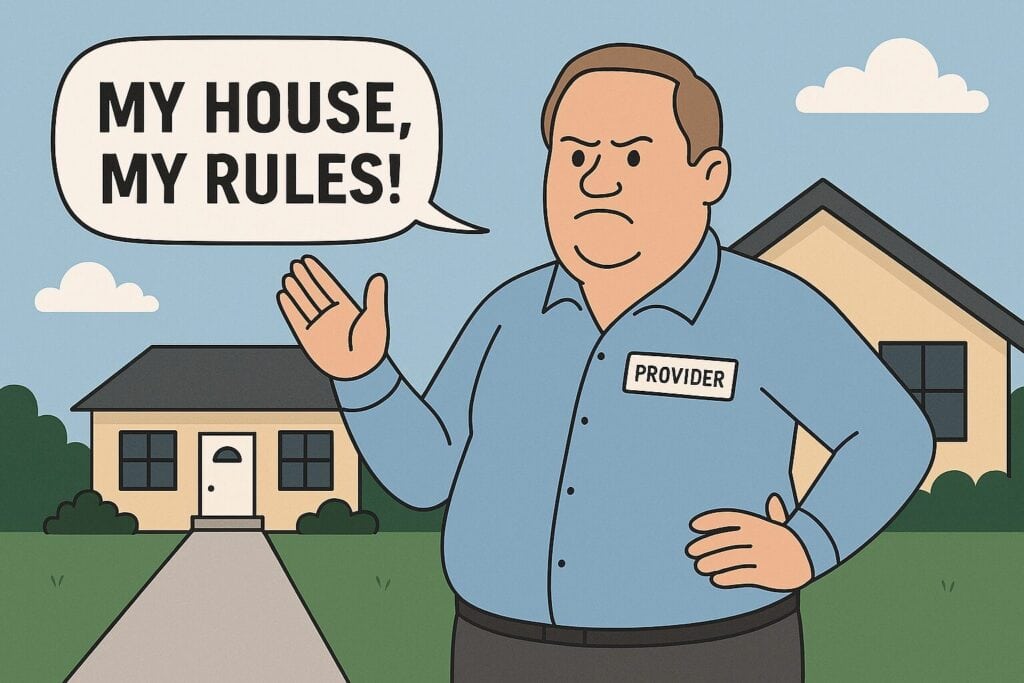
Massachusetts often points to the Home and Community-Based Services HCBS Settings Rule as justification for closing or downsizing state‑operated Intermediate Care Facilities (ICF/IID) like the Wrentham Developmental Center and Hogan Regional Center. The narrative is familiar: HCBS group homes are “community‑based,” while state‑operated facilities are “institutional.” But Massachusetts has HCBS settings rules issues.
The federal rule does not say that provider‑owned group homes automatically qualify as community settings. In fact, the rule imposes stricter requirements on provider‑owned homes precisely because they are at risk of functioning like institutions
And as we look closely at how HCBS is implemented in Massachusetts, it becomes clear that many provider‑owned group homes do not meet the federal standard — not in structure, not in rights, and not in practice.
What HCBS Is — and What It Is Not
Home and Community‑Based Services (HCBS) are Medicaid‑funded supports designed to help people with disabilities live in homes and community settings rather than in institutional facilities. HCBS is not a single program; it is a collection of unbundled services delivered by private providers.
Intermediate Care Facilities for Individuals with Intellectual Disabilities (ICF/IID), by contrast, are federally regulated residential programs that provide 24‑hour, comprehensive care for people with significant intellectual and developmental disabilities. They are unified service models with built‑in oversight, medical integration, and enforceable rights.
Massachusetts often treats HCBS group homes as inherently “community‑based,” but the federal rule requires much more than a small building in a neighborhood.
What the HCBS Settings Rule Actually Requires
Under 42 C.F.R. § 441.301(c)(4), provider‑owned or provider‑controlled homes must guarantee:
- A legally enforceable agreement giving the resident the right to occupy the home
- Eviction protections comparable to landlord‑tenant law
- Control over visitors
- Privacy
- Autonomy
- Freedom from coercion and restraint
- A setting that is integrated in the community, not just physically located there
Massachusetts’ own HCBS compliance documents reiterate these requirements, emphasizing that tenancy protections and visitor rights are non‑negotiable.
National benchmarks — such as Wisconsin’s HCBS compliance guide — reinforce the same standards: residents must have leases, unrestricted access to visitors, and housing that is not contingent on receiving a specific provider’s services.
Yet in practice, many Massachusetts providers operate in ways that contradict these requirements.
When Housing Is Contingent on Services, It Is Not a Home
A recent consent form from a Massachusetts provider states that residents cannot rent, lease, or otherwise occupy the home unless they also receive the provider’s services.
This violates the core of the HCBS Settings Rule.
It also contradicts Massachusetts’ own HCBS guidance, which requires:
- A lease or residency agreement
- Eviction protections
- Separation of housing and services
When a provider controls both the housing and the services, the resident does not have a home. They have a bed assigned by a service agency.
Visitation Restrictions Reveal the Structural Problem
Massachusetts DDS policy is explicit: individuals have the right to visitors of their choosing at any time, unless a specific, assessed need is documented in the Individual Support Plan and reviewed by a Human Rights Committee.
Yet the reality in many HCBS group homes looks very different.
The recent COFAR report on Giovanny Arias, a young man injured in a Seven Hills group home, illustrates what happens when tenancy protections and visitation rights are absent. After Giovanny suffered serious injuries, his family was:
- Barred from visiting him in the group home
- Barred from visiting him in the hospital
- Denied medical updates
- Subjected to police intervention when attempting to visit
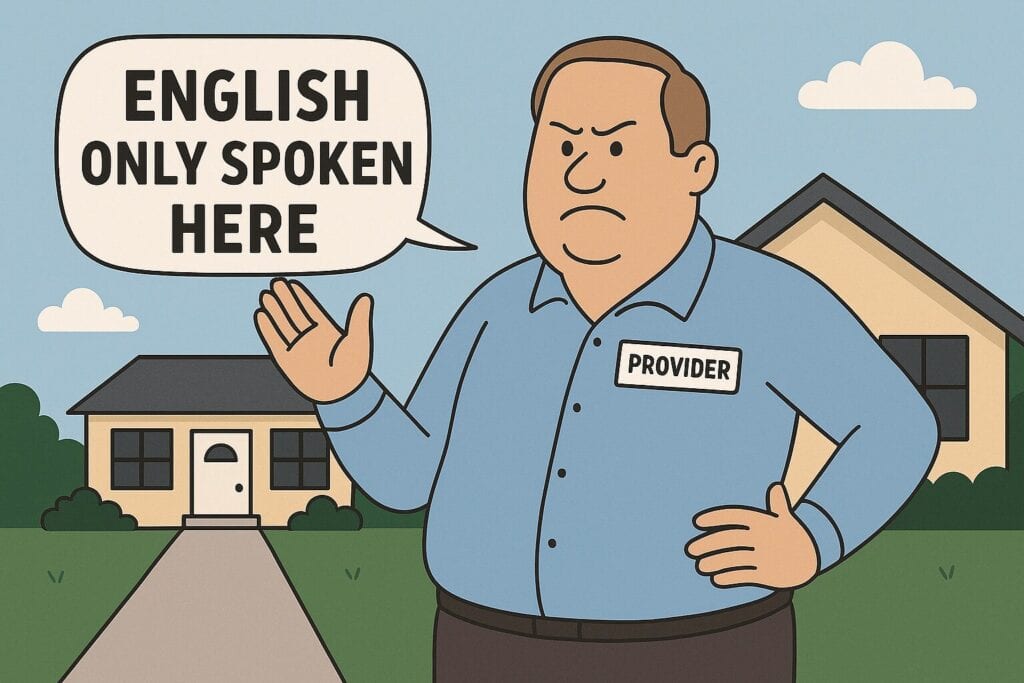
- Required to follow English‑only communication rules
- Restricted to two visits per month, off‑site, for two hours
These restrictions violate:
- DDS visitation regulations
- DDS human rights policies
- The HCBS Settings Rule
- The 2024 guardianship decree affirming Giovanny’s right to choose his visitors
- National HCBS compliance benchmarks
No one living in their own home would accept:
- Two visits per month
- Mandatory English‑only communication
- No food allowed
- Off‑site visitation only
- Provider discretion to terminate visits
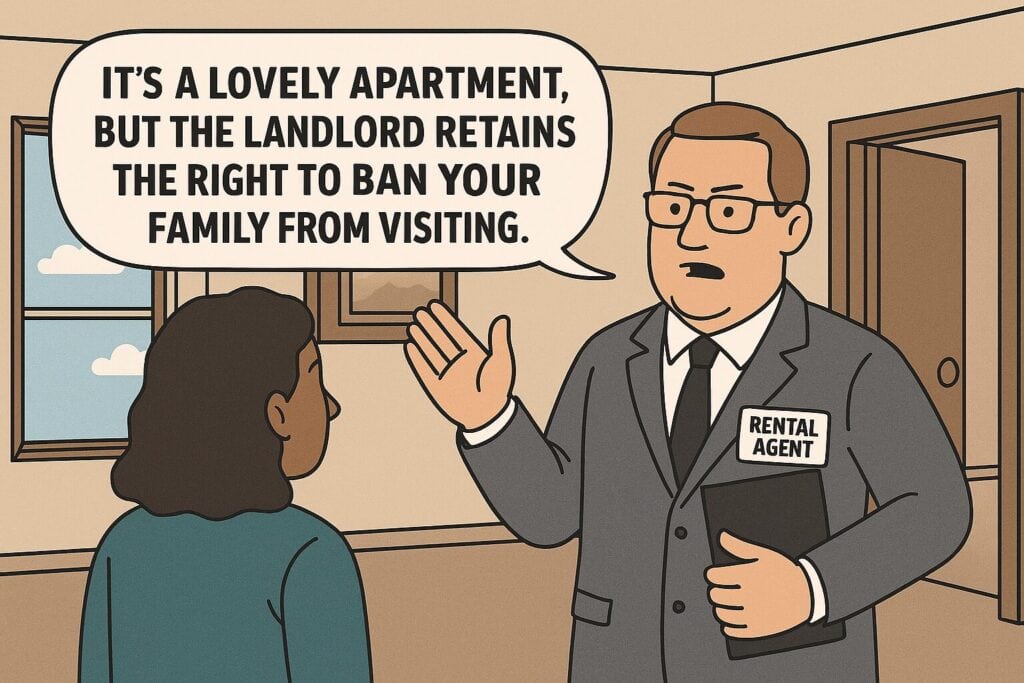
This is not community living!
Why Tenancy Protections Matter
The HCBS Settings Rule requires tenancy protections because housing is the foundation of autonomy. Without a lease or equivalent agreement, a resident has:
- No right to remain in the home
- No right to challenge eviction
- No right to control who enters
- No right to privacy
- No right to stability
- No right to assert themselves against provider overreach
Massachusetts DDS policy, federal regulations, and national compliance guides all agree: tenancy protections are essential to prevent provider‑controlled settings from functioning like institutions.
Yet many Massachusetts HCBS group homes still operate without them.
Why Wrentham and Hogan Remain Essential
Wrentham and Hogan are often labeled “institutions,” but in practice they provide more rights, more stability, and more transparency than many HCBS group homes.
At Wrentham and Hogan:
- Families are not barred from visiting
- Staff cannot unilaterally restrict communication
- Residents are not evicted because a provider changes its business model
- Oversight is public, not private
- Abuse investigations are handled by state entities, not internal provider staff
- Medical care is integrated, not fragmented
- Cultural and linguistic needs are respected
- Guardians are not pressured to sign restrictive visitation agreements
Most importantly, the resident’s home is not contingent on a private agency’s service contract.
For individuals who need stability, predictability, and protection from provider overreach, Wrentham and Hogan offer something HCBS group homes often cannot: a home that cannot be taken away by a private agency.
A Call for Honesty — and Reform
Massachusetts cannot continue to claim that HCBS group homes are “homes in the community” while:
- Providers deny residents tenancy protections
- Providers restrict family visitation
- Providers control communication
- Providers bar families from hospitals
- Providers call police on elderly relatives
- Providers impose English‑only rules
- Providers limit visits to two hours twice a month
- Providers require residents to use their services as a condition of housing
These practices are not community living.
They are institutional practices of the past carried out in smaller buildings.
If the Commonwealth wants HCBS to succeed, it must:
- Require real tenancy protections
- Prohibit blanket visitation restrictions
- Ensure residents control their relationships
- Protect culturally and linguistically diverse families
- Hold providers accountable for transparency and care
- Preserve Wrentham and Hogan as essential options for those who need them
Community living is not defined by the size of the building.
It is defined by rights, autonomy, stability, and access to the people who love you.
Until HCBS group homes in Massachusetts can guarantee those things, they cannot be described — honestly or ethically — as “homes in the community.”